Azuero Peninsula
Dry savannas, colonial villages, and Pedasí beaches: the Azuero Peninsula keeps the rural rhythm and traditional celebrations that have shaped Panama's national identity.
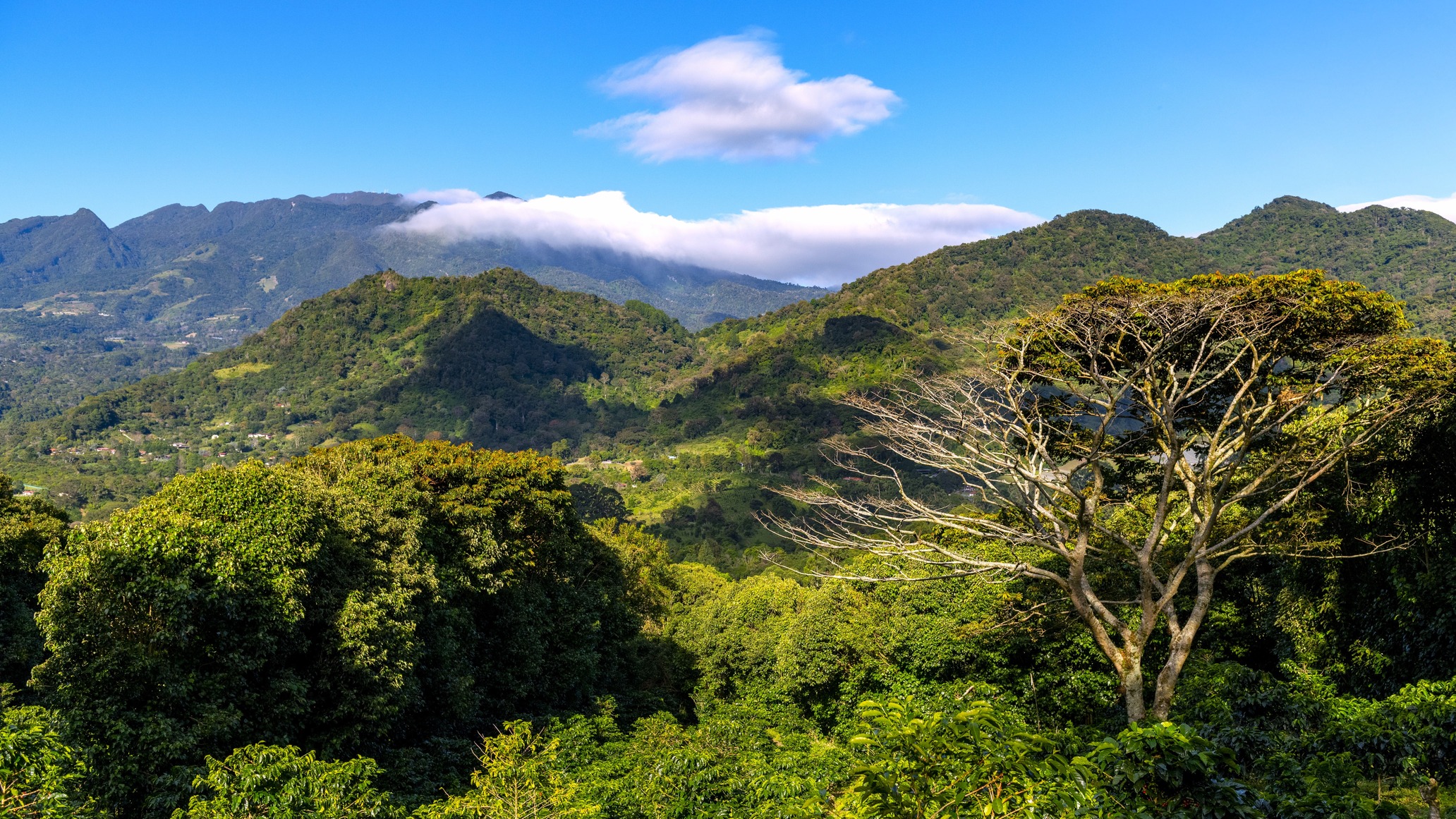
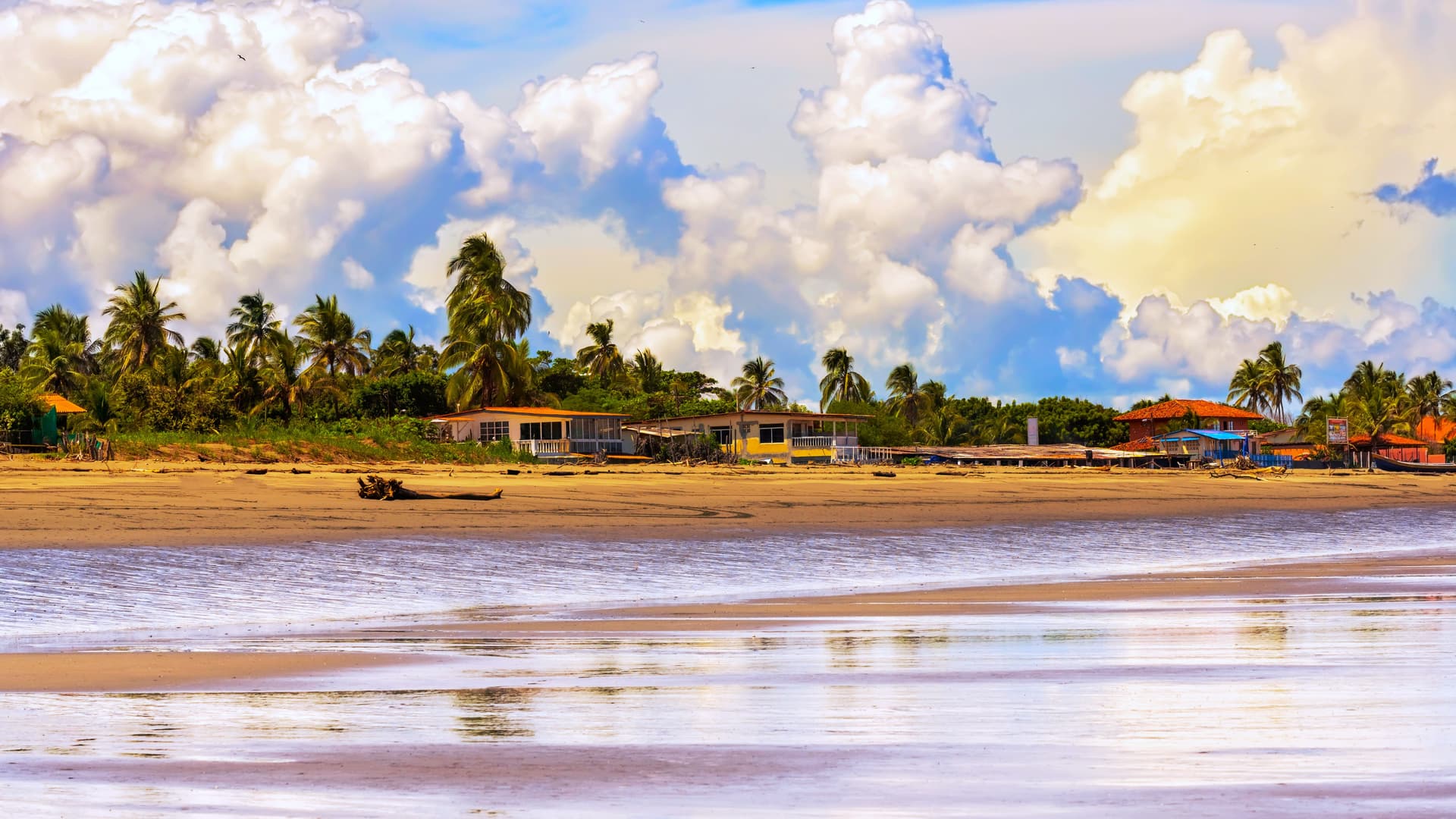
The Azuero Peninsula juts into the Pacific southwest of the capital, roughly 4.5 hours' drive from Panama City via the Bridge of the Americas and the Carretera Interamericana. It is a land of low hills, dry savannas, and beaches lined with coconut palms, long isolated from the rest of the country by the absence of paved roads. This relative isolation has preserved a rural way of life and a Hispanic cultural foundation that Panamanians themselves regard as the matrix of their national identity.
The three provinces that share the peninsula—Herrera, Los Santos, and part of Veraguas—still live largely from cattle ranching, sugar cane, and coastal fishing. The villages we pass through from Chitré to Pedasí retain their low houses with tile roofs, central plazas with colonial churches, and an agricultural economy visible in the landscape: sorghum fields, herds of Brahman cattle, artisanal distilleries of seco, the national spirit distilled from sugar cane. In La Villa de Los Santos, it was here that Panama's first act of independence from Spain was signed in 1821, a fact locals are keen to remind visitors of.
Las Tablas, capital of Los Santos Province, concentrates the region's cultural life. Its February Carnival, which pits two rival neighborhoods—Calle Arriba and Calle Abajo—against each other for four days, mobilizes floats, queens elected a year in advance, and polleras, embroidered dresses whose creation sometimes takes ten months of work. The Festival of Santa Librada in June flows into the Festival of the Pollera, where families parade in traditional costumes. More understated, the village of Guararé hosts the Festival de la Mejorana in September, dedicated to folk music and the diatonic accordion, the central instrument of Azuero's rural music traditions.
Along the coast, Pedasí remains a fishing village of around 3,000 inhabitants, 3.5 hours south of Chitré. It is our usual base for reaching Isla Iguana by boat (a 20-minute crossing), a small marine reserve prized for its coral reef and, between May and November, for observing leatherback turtles that come ashore to nest on the nearby beaches of Playa Venao. More adventurous travelers venture further south to Isla Cañas, whose 13 km of beach host massive olive ridley turtle nestings between August and October. Playa Venao, a long horseshoe-shaped bay, has also become a recognized surf spot over the past decade, with consistent swell year-round.
The interior deserves lingering. La Arena, on the outskirts of Chitré, groups pottery workshops that perpetuate pre-Columbian techniques, notably red engobe patterns. In Ocú, a village in the peninsula's northwest, the raising and weaving of the pintao hat is still transmitted within families: a quality hat requires several weeks of weaving and costs between 100 and 800 dollars depending on fineness. At table, Azuero's cuisine remains that of the countryside: sancocho of chicken with cilantro, thick corn tortillas roasted on coals, chicheme made from crushed corn and sweetened milk.
We recommend Azuero to travelers who have already explored Panama's classic sites and seek a different pace, or to those who want to understand the country beyond Panama City and the Canal. The peninsula remains lightly touched by international tour circuits, which translates into modest yet authentic hotel infrastructure and genuine exchanges with residents.
Must-see attractions
Las Tablas Carnival in February. Four days of festive rivalry between Calle Arriba and Calle Abajo, with floats, embroidered polleras, and tonadas sung until dawn. It is Panama's most-followed carnival—book accommodation six months in advance.
Leatherback turtles at Isla Iguana and Isla Cañas. May through November for leatherbacks, August to October for olive ridleys at Isla Cañas. Nighttime outings accompanied by a refuge ranger, red light required, 10-meter distance maintained.
Pottery workshops of La Arena. On Chitré's outskirts, around twenty families still fire wood-oven tinajas and figurines with designs inherited from the pre-Columbian cultures of Gran Coclé. Direct workshop visits and purchases possible.
Playa Venao for surfing and sunsets. Horseshoe bay facing due south, consistent swell year-round, surf schools on the beach. In the evening, a few beachside bars, with no heavy development.
Pintao hats from Ocú and La Pintada. Weaving of bellota and chisná fibers dyed with vegetable charcoal. Inscribed on UNESCO's intangible cultural heritage list in 2017. Visits to master artisans possible by appointment.
When to go
Azuero is Panama's driest region. The dry season runs from mid-December to mid-April, with daytime temperatures around 32 to 34°C, nights at 22–24°C, and constant wind that makes the heat manageable. This is the ideal period to explore the peninsula: passable roads, golden savanna landscapes, clear skies. February coincides with Las Tablas Carnival, and hotels are fully booked within a 50 km radius—plan far in advance.
The rainy season, from May to November, remains gentler than elsewhere in Panama: showers are concentrated late afternoon and rarely last more than an hour. September and October see the most precipitation, around 200 mm monthly, but this is also the turtle nesting window at Isla Cañas. Landscapes turn green, rivers fill, and tourist crowds remain light. Avoid this period only if you plan to combine it with Bocas del Toro or Boquete simultaneously, where rainfall is far more pronounced.
Practical advice
We recommend dedicating 3 to 4 full days to Azuero to grasp its character: one day for Chitré, La Arena, and La Villa de Los Santos; one day for Las Tablas and Guararé; and two days on the coast around Pedasí and Playa Venao. The logistics entry point is the road from Panama City (roughly 4.5 hours to Chitré, 6 hours to Pedasí) or a domestic flight Albrook–Chitré (45 minutes, limited frequency). We systematically arrange private vehicle transport with driver, as internal distances are short but rural signage sometimes unclear.
The region flows naturally with Panama City and the Canal as an opening or closing segment. Combining with Chiriquí and Boquete also works well via the road through Santiago. We advise against pairing Azuero with Guna Yala or Bocas del Toro in a single week, as transport logistics and atmospheres differ too greatly. Hotel comfort remains modest: charming guesthouses in Pedasí, eco-lodges in Playa Venao, family hotels in Chitré. Azuero appeals to contemplative travelers, enthusiasts of living culture, and families seeking calm beach getaways, rather than to those drawn to dense jungle or spectacular nature.