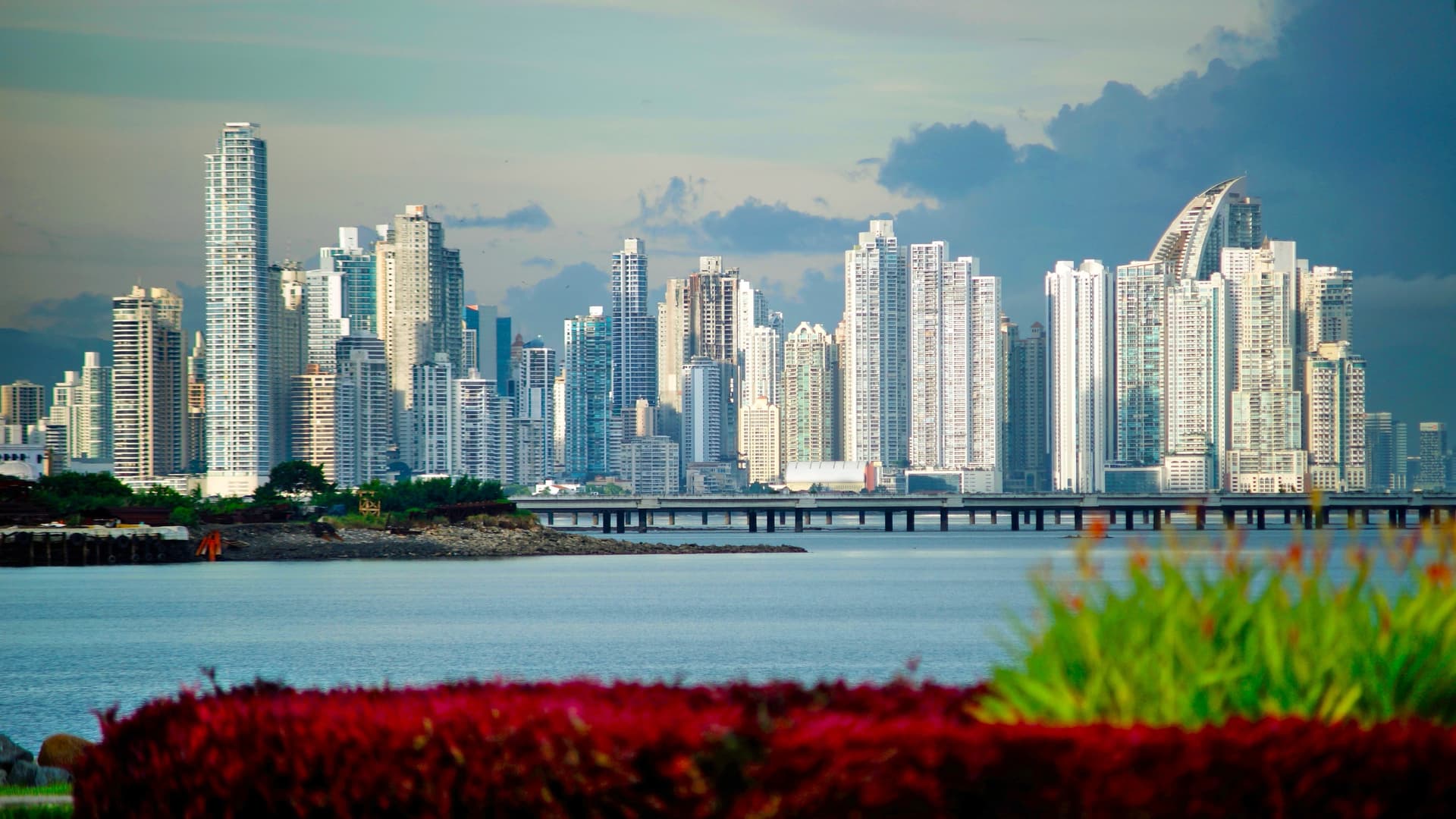
Panama City and Canal
A tropical capital where skyscrapers brush the jungle, shaped by the 1914 canal and its forest corridor inhabited by toucans and sloths.
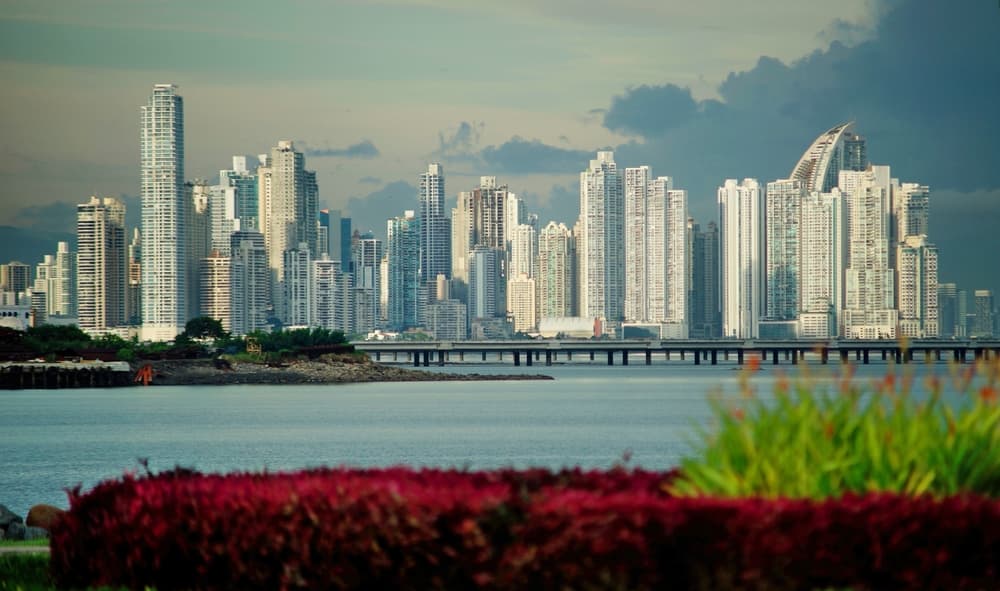
Panama City is one of the rare Latin American capitals where you can move in twenty minutes from a financial district of skyscrapers to a tropical rainforest inhabited by sloths and toucans. This geographical compression stems from the city's position: wedged between the Bay of Panama on the Pacific side and the canal opening toward the Atlantic, it has developed along a narrow corridor where the jungle reclaims its territory as soon as you leave the main avenues. Our agency is based here, and we organize most arrivals in this region before moving on to the rest of the country.
The historic center, Casco Viejo, occupies a rocky peninsula to the southwest of the city. Seven pedestrian blocks concentrate the restored nineteenth-century facades, the San José church and its gilded altar, Bolívar square, and a serious dining scene: you can dine for 25 to 40 USD in former colonial houses converted by Panamanian chefs like Mario Castrellón or José Carles. Two kilometers away, the Cinta Costera runs along the bay and offers an immediate read of the modern skyline, between the towers of Balboa Avenue and the fish market (Mercado de Mariscos), where ceviche costs 4 USD per cup.
The canal structures the entire region. Put into service in 1914, it was widened in 2016 with the Cocolí locks (Pacific side) and Agua Clara locks (Atlantic side), capable of accommodating Neopanamax vessels of 366 meters. The most accessible observation site remains Miraflores, 30 minutes by car from downtown: a covered platform allows you to follow the passage of container ships and the workings of the locks, with a decent museum to understand the logistics. For a more active approach, we organize partial transits by boat between Gamboa and Miraflores, roughly 4 to 5 hours on the water.
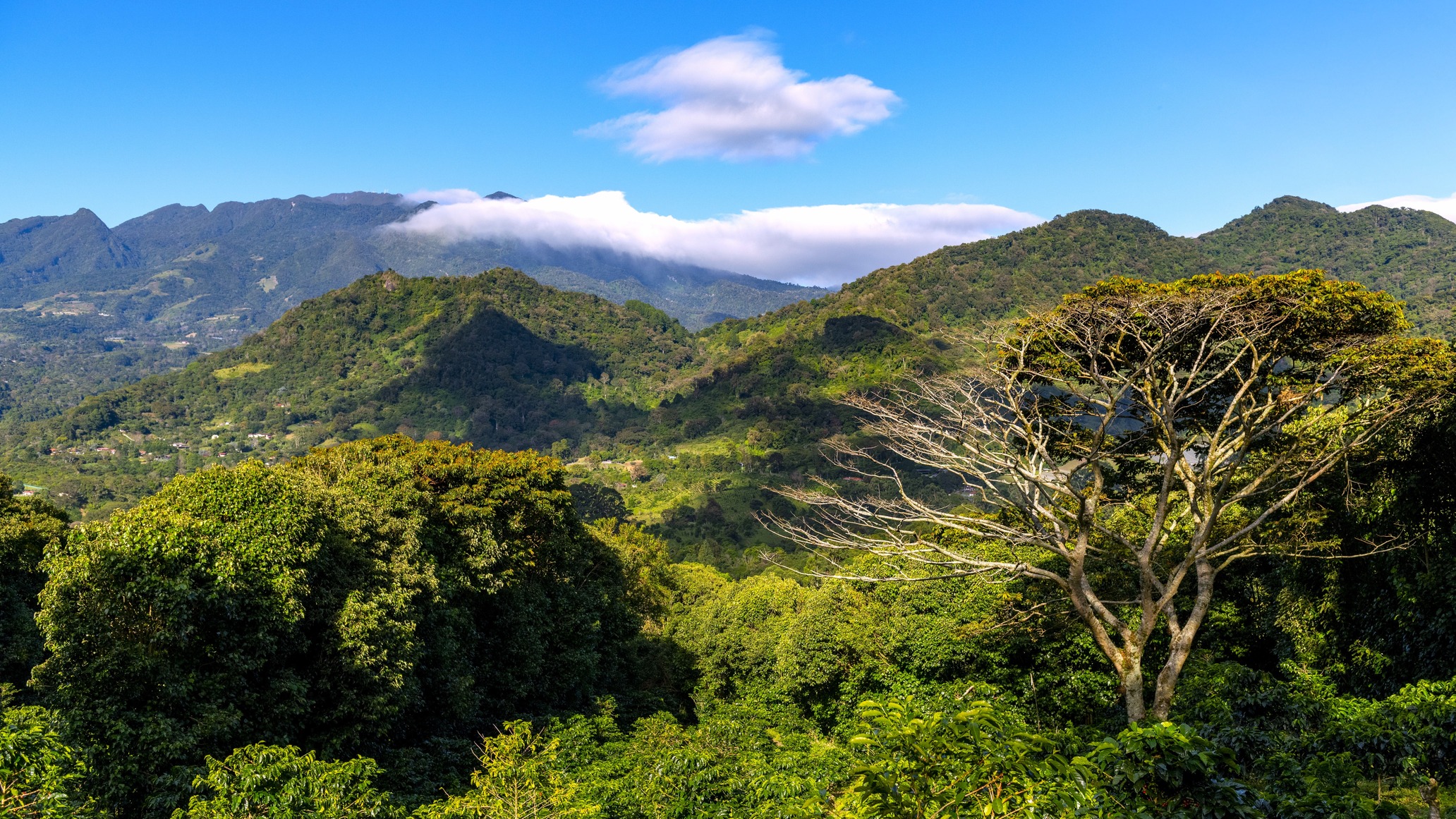
What often surprises travelers is the density of nature bordering the canal. Soberanía National Park, accessible in 45 minutes from the city center, protects 19,500 hectares of humid tropical rainforest. The Pipeline Road is an internationally recognized birding site: more than 400 species recorded, including crested toucans, trogons, and several tanager species. Three-toed sloths, white-faced capuchins, and howler monkeys are frequent. Further north, Lake Gatún, created by the canal dam, harbors Barro Colorado Island, a Smithsonian research station accessible by reservation.
The region bears a readable trace of the cultures that cross through it. The Emberá live in communities along the Rio Chagres, within the national park of the same name. A day visit from Panama City by motorized canoe allows you to exchange with a family, share a meal of tilapia and patacones, and observe demonstrations of basketry in chunga fiber. We work with two communities that have structured these welcomes over time, which enhances the quality of the exchange compared to one-off formulas.
The climate is humid tropical year-round, between 27 and 31°C, with high humidity. The city operates 24/7: taxis, Uber, late-opening restaurants, proper security in tourist and residential neighborhoods. It's a pragmatic entry point to understand how Panama articulates its maritime economy, colonial history, and isthmus geography before heading to more remote regions.
To discover
Casco Viejo on foot in the evening. Seven pedestrian blocks between Independence Square and the southern point, nineteenth-century facades lit up, 360° rooftops overlooking the bay and modern skyline. Budget 25 to 40 USD for dinner in a restored colonial house.
Miraflores locks and partial transit. Watch the passage of Neopanamax ships from the covered platform, 30 minutes from downtown. For a more complete experience, a boat transit between Gamboa and Miraflores takes 4 to 5 hours and crosses two sets of locks.
Pipeline Road at Soberanía. Former military trail turned major birding site, 45 minutes from the city. More than 400 bird species, sloths and howler monkeys visible in the early morning hours.
Meeting an Emberá community. Ascent of the Rio Chagres by motorized canoe to a village in Chagres National Park. Meal of grilled tilapia wrapped in bijao leaf, conversations about chunga basketry and temporary jagua tattoos.
Mercado de Mariscos at lunch. The fish market on the bay's edge serves corvina ceviche at 4 USD per plastic cup, eaten standing while watching boats unload. The contrast with the business towers just behind sums up the city.
When to go
The region can be visited year-round thanks to stable temperatures between 27 and 31°C, but the dry season, from mid-December to mid-April, offers the best conditions: clear skies over the locks, Soberanía park trails passable, wildlife observation facilitated. January and February are the driest months, sometimes seeing less than 20 mm of cumulative rain over the month. Hotel occupancy spikes around the holidays and carnival (4 days before Ash Wednesday), so book early.
From May to November, the rainy season brings daily showers, generally in late afternoon, with cumulative rainfall of 200 to 300 mm in October and November, the wettest months. Mornings often remain usable for visits, and the rainforest is greener, but boat transits on the canal may be cancelled in case of storms. September and October are conversely the best months for neighboring Darién, possibly to combine.
Practical advice
We recommend 2 to 3 full days in the region: one day for Casco Viejo and the bay, one day for the canal and Soberanía, a third for the Emberá or Lake Gatún. Tocumen International Airport, 30 minutes from downtown, is the natural entry point to the country, making Panama City the logistical hub of any Panamanian itinerary. From here, air connections to Bocas del Toro (1 hour), David for Chiriquí and Boquete (1 hour), and Guna Yala airstrips (30 minutes) depart daily.
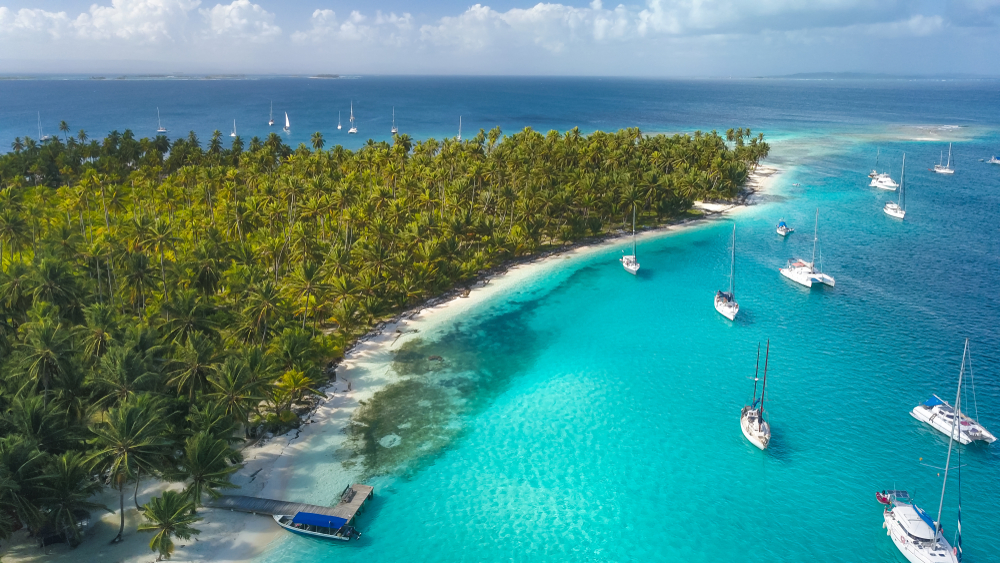
The smoothest combination remains Panama City then Guna Yala (San Blas) for the Caribbean Sea contrast, or Panama City then Chiriquí and Boquete to shift toward altitude and coffee. Travelers with more time then add Bocas del Toro on the Caribbean side or the Azuero Peninsula for rural culture and traditional celebrations. Hotel comfort level is high in the capital, from Casco Viejo boutique hotels to international establishments in the financial district. The region suits all profiles, including families, provided you enjoy dense, tropical cities: pure contemplatives will prefer to head quickly to the jungle or islands.