Guna Yala (San Blas)
Autonomous archipelago of the Guna people since 1925: 365 Caribbean islands, cabins on sand cays, hand-stitched molas and access only by 4x4 and lancha.
Guna Yala, still known to many as San Blas, is an autonomous comarca stretching nearly 370 kilometers of Caribbean coastline, from Colón to the Colombian border. The territory has been administered since 1925 by the Guna people, following the Tule Revolution that secured political, judicial, and cultural autonomy recognized by the Panamanian state. In practical terms, when you arrive, you enter a territory with its own rules: no foreign construction, no outside investment on the islands, strict oversight of visitor numbers. Our team based in Panama City works exclusively with Guna families who own their own cabins, which shapes the type of stay we offer.
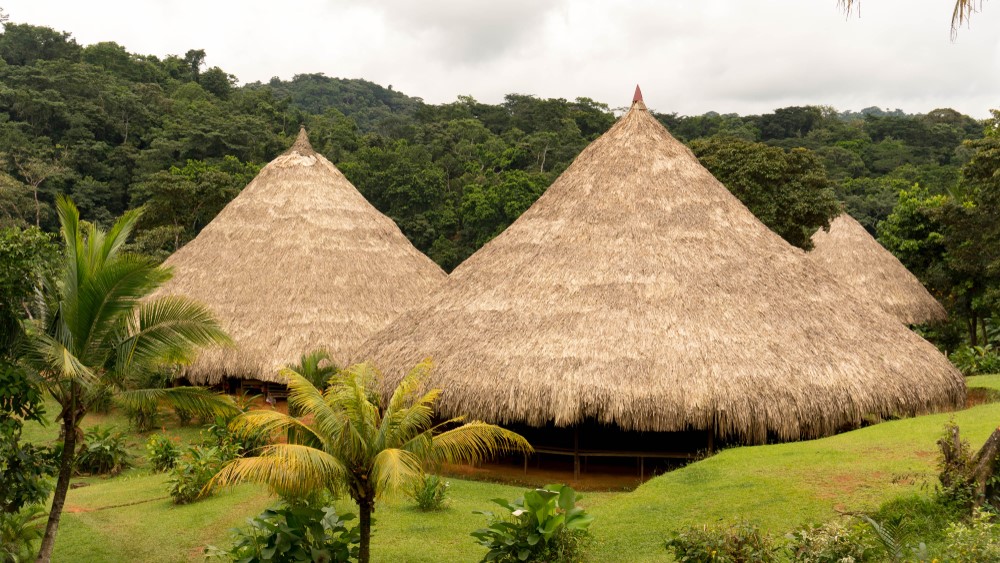
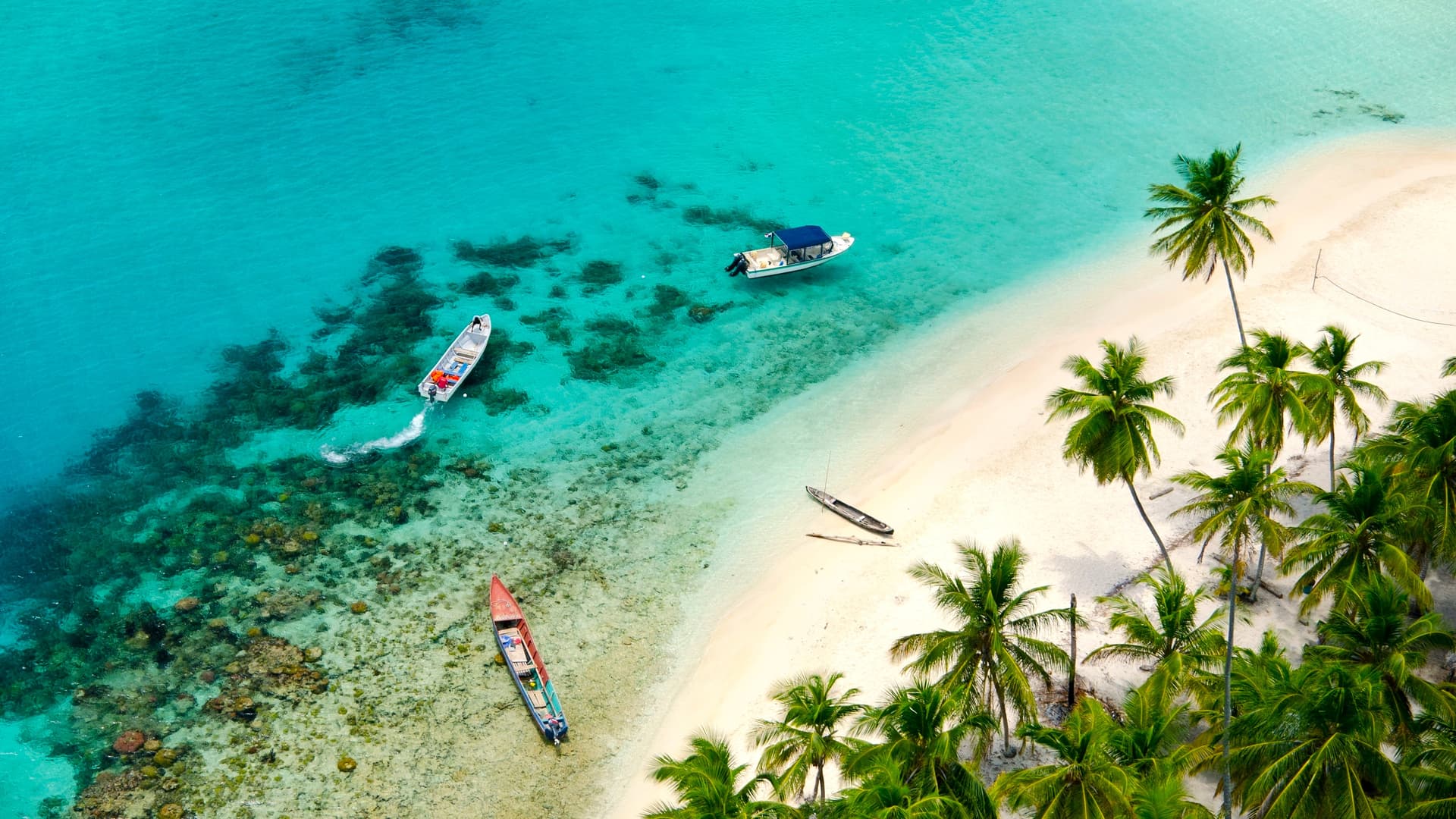
The archipelago comprises roughly 365 islands and islets, only about fifty of which are inhabited. The largest communities are found at Carti Sugtupu, Nalunega, Wichub Huala, and Achutupu. These villages are densely packed—sometimes 1,000 residents on a single hectare of coral outcrop—with houses of bamboo cane and palm-thatch roofs crowded tightly together. Nearby, dozens of uninhabited cays serve as lodging bases for travelers: a sandbank, three coconut palms, a handful of stilt cabins. It's this contrast—dense human community on one side, near-deserted islet on the other—that defines the experience.
Access remains the primary filter. From Panama City, you need 3.5 to 4 hours by 4x4 to reach the port at Cartí, the final hour descending a very steep track through the San Blas mountain range. Passing through the Llano-Cartí border post, where comarca entry fees are collected (approximately 22 USD per person), marks the change in jurisdiction. From Cartí, you board a lancha—outboard motorboats—for 20 minutes to 1.5 hours depending on your destination island. The most remote islands, toward Coco Bandero or the Cayos Holandeses, require more navigation and are best reserved for stays of at least three nights.
Guna culture is visible everywhere. Women wear the mola daily, a textile panel created through reverse appliqué layering, fixed to the bodice. The motifs depict fish, birds, sometimes abstract scenes drawn from nele, traditional cosmology. A quality mola takes two to six weeks of work and sells for 25 to 80 USD directly from the artisans. Mola craftsmanship is recognized by UNESCO as intangible cultural heritage. Food-wise, meals consist of what the sea and mainland provide that day: grilled fish, lobster during open season (March to June), coconut rice, platano patacones, Tule fish and plantain soup. Fresh water comes from mainland rivers, brought by canoe each morning.
The climate is stable tropical maritime. The sea remains at 28°C year-round. The dry season runs from late December to mid-April with steady trade winds that can make the sea choppy. From May to November, rains arrive in short afternoon squalls; the sea is calmer, underwater visibility often better. September and October are the wettest months but also the greenest and least crowded. The archipelago lies outside the hurricane belt, which explains why the Guna have made this home since the 19th century after their migration from Darién.
Our role as a local agency is to tailor the stay: select the island based on your tolerance for rustic conditions, arrange ground transport, negotiate full board directly with families, and prepare travelers for what they'll find. Guna Yala is not a conventional beach resort: no air conditioning, no hot running water, no wifi on most islands, and electricity is usually limited to a few hours of generator power in the evening.
What to Experience
Overnight on a Cayos Holandeses islet. Three stilt cabins, a sandbank 200 meters long, and the archipelago's outer reef barrier just a few fathoms away. Snorkelers find the most stunning walls here, with barracudas and green sea turtles.
Visit to Nalunega village. 1,200 residents on less than a hectare, sand-paved lanes between bamboo houses, a communal school, and a casa del congreso where evening assemblies are held. This is where you understand Guna political organization.
Shopping for molas from the seamstresses. On most islands, women display their panels in late afternoon. Choosing a mola means examining the reverse: the finer and more invisible the stitches, the older and more labor-intensive the piece.
The natural pool of Cayo Limón. A shallow sandy bottom at waist height, 30 minutes by lancha from Cartí. Red starfish visible to the naked eye, translucent water even during rainy season.
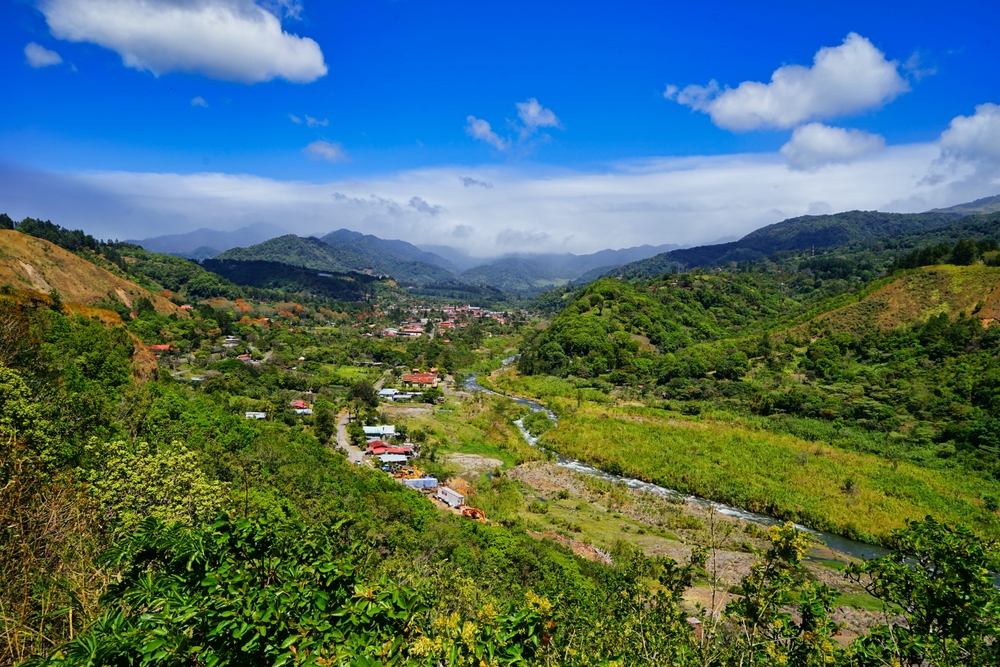
The mountain pass from Llano. The track descending to Cartí cuts through the pristine forest of the San Blas sierra, with a viewpoint at 350 meters altitude where you can spot the first islands. The Guna still cultivate plots of yucca and banana here.
When to Go
The best time for Guna Yala runs from late December to mid-April. Rain is rare, skies are clear, and temperatures range between 26 and 31°C. In return, the trade winds of January-February can kick up choppy seas that make lancha crossings uncomfortable on long routes, particularly toward Coco Bandero. March and April often offer the best compromise: less wind, calm seas, crystal-clear water.
From May to November comes the rainy season, with monthly totals reaching 250-300 mm in September and October. Showers concentrate in late afternoon and rarely last more than an hour. Mornings generally stay sunny, leaving time for sea outings. This is also when the archipelago empties out, island vegetation is densest, and prices negotiated with Guna families are lowest. We only advise against the first half of November, which combines heavy rainfall with sometimes uncomfortable residual swell.
Practical Advice
We recommend a minimum of 3 nights on site, which translates to 2 full days once ground and sea transfers are factored in. Shorter stays make the travel-time-to-experience ratio unfavorable. For travelers wanting to reach outer islands like Cayos Holandeses or Coco Bandero, plan for 4 to 5 nights. Access is exclusively by road from Panama City via Cartí, making the region easily combinable with Panama City and the Canal at the start or end of your trip. Internal flights to the Achutupu or Playón Chico airstrips exist but remain irregular; we arrange them on request for travelers wanting to avoid the 3.5 hours of 4x4 driving.
Comfort is deliberately rustic: bamboo and palm cabins, simple beds with mosquito nets, shared cold-water facilities, limited electricity. This is a destination for the contemplative, couples seeking genuine disconnect, snorkelers, and families with children aged 6-7 and up who can handle heat and lack of screens. It pairs naturally with Bocas del Toro if you want to compare Panama's two Caribbean faces, or with Chiriquí and Boquete for a sea-and-mountain combination. We avoid pairing it with Darién in a single trip, since both regions demand heavy logistics that would overwhelm an itinerary under two weeks.