Boquete
Boquete
Boquete is a Panamanian mountain town at 1,000 m altitude, renowned for its exceptional arabica coffee, cloud forest trails and the ascent of Barú volcano, Panama's highest peak.
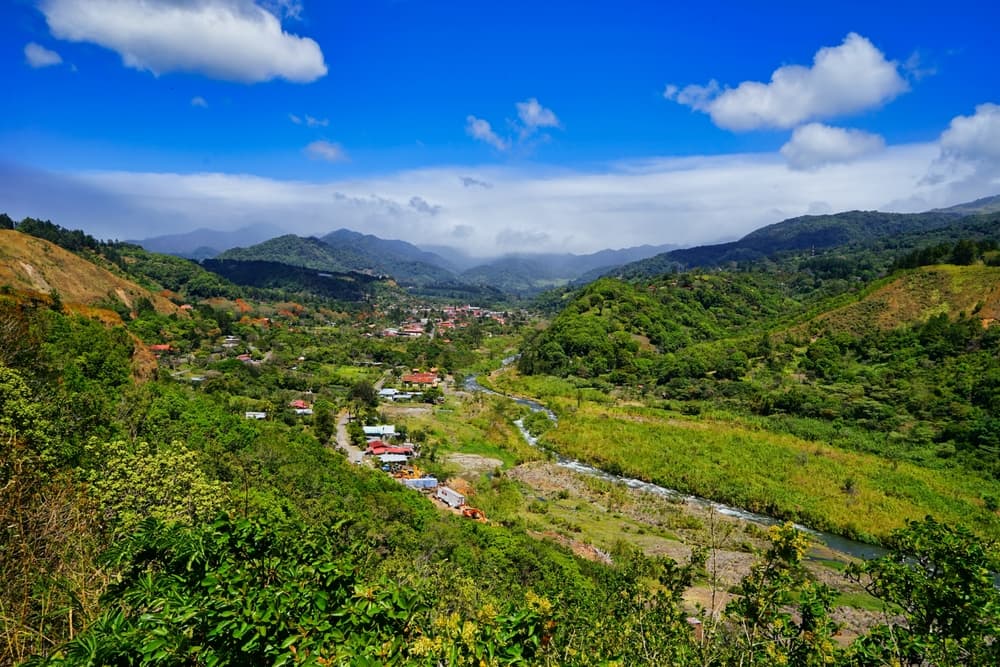
Boquete is a small mountain town nestled in the highlands of Chiriquí province, in northwestern Panama. Perched at approximately 1,000 meters altitude in the Caldera river valley, it is known for its cool microclimate, high-altitude coffee plantations and hiking trails at the foot of Barú volcano, the country's highest peak.
Practical information at a glance
- Altitude: approximately 1,000 m — plan for an extra layer, nights are cool.
- Best season: dry season (December to April) for hiking and clear views of Barú.
- Recommended duration: 2 to 4 days to combine coffee, hiking and birdwatching.
- Access: bus from David (capital of Chiriquí); approximately 45-minute journey. David is accessible by air from Panama City.
- Currency: Panamanian balboa (1:1 parity with the US dollar).
What to see
Boquete is worth visiting as much for its landscapes as for its activities. High-altitude arabica coffee plantations (particularly in the Jaramillo and Palmira areas) welcome guided tours with tastings. The trails of Volcán Barú National Park traverse dense cloud forests, home to the resplendent quetzal. The compact downtown area bustles with markets, restaurants and hiking agencies.
History and context
Founded in the early twentieth century, Boquete attracted European and North American settlers drawn by the fertility of volcanic soils. This migration history explains the hybrid architecture of the downtown area and the diversity of agricultural operations. Since the 2000s, the town has become a popular destination for foreign retirees and travelers seeking fresh air and specialty coffee.
Highlights of the visit
Ascending Barú volcano
Barú peaks at 3,474 m, the highest point in Panama. On clear days, the summit offers a view of both oceans — Pacific and Atlantic. The nocturnal ascent (departure around midnight) is the most popular way to reach the summit at sunrise. The trail is demanding; a local guide is strongly recommended.
Spotting the resplendent quetzal
The cloud forest around Boquete is one of Central America's best sites for observing the resplendent quetzal. The nesting season (February to June) offers the best chances. The Bajo Mono and Los Quetzales trails are the most frequented by birdwatchers.
Chiriquí coffee
Boquete coffee — particularly Geisha varieties — ranks among the world's most prized. Several fincas offer comprehensive tours: cultivation, harvest, processing and roasting. The Feria del Café, held annually in January, brings together producers and international buyers.
Rafting on the Chiriquí river
Rivers descending the flanks of Barú offer rafting and kayaking routes suited to different skill levels. The Chiriquí Viejo river is renowned for its technical rapids; the Chiriquí river is better suited for beginners.
Photography tips
Morning light reveals mists clinging to the wooded slopes of the valley — ideal from the heights of Jaramillo. For birds, a telephoto lens is essential. In town, the weekend market offers colorful scenes mid-morning. Avoid peak afternoon fog for views of Barú.
Location and access
Boquete is located approximately 45 km north of David, capital of Chiriquí province. David has an airport with connections to Panama City. Regular buses link the two towns throughout the day. Downtown Boquete is easily accessible on foot; fincas and trails on the outskirts require a taxi or rental vehicle. Accessibility in downtown is reasonable, but hiking trails are not developed.
Nearby
- Volcán Barú National Park — cloud forest, quetzals and ascent of Panama's highest peak, accessible from Boquete or Cerro Punta.
- Cerro Punta — high-altitude agricultural village on the other side of Barú, starting point for the Los Quetzales trail.
- David — transit town and capital of Chiriquí, with markets and connections to the Pacific coast.
- Chiriquí beaches — Pacific coast less than two hours away, to contrast mountains and sea.
Frequently asked questions
The dry season, from December to April, offers the best conditions for hiking and enjoying views of Barú volcano. To observe the quetzal, prioritize February to June, the nesting period.
A local guide is strongly recommended: the trail is long, the altitude high and the weather changeable. Agencies based in Boquete organize guided nocturnal ascents.
The fastest option is a flight to David, then a bus or taxi to Boquete (approximately 45 minutes). By bus from Panama City, allow a full day of travel with a connection in David.
Some fincas accept walk-in visits, but reserving in advance guarantees proper reception and guided tasting under good conditions, especially during peak season.
Yes, for gentle activities: finca visits, short cloud forest trails, rafting on calm sections. The Barú ascent is not recommended for young children.
Waterproof hiking boots, warm clothing (nights at the summit are close to 0 °C), light waterproof jacket and headlamp for the nocturnal ascent of Barú.
Want to discover this destination?
Our local advisors design your tailor-made trip.